
General Information
General Information About the District

The District operates under a service plan approved by Jefferson County in 2022. The District's service area is located in unincorporated Jefferson County, Colorado and is zoned entirely for residential use. There are 695 home lots within the District's boundaries but the District provides no services to the community. (A separately funded HOA provides various services for the community.) However, the District does levy property taxes to fund the repayment of $45 million in bond debt the District issued in 2021 to subsidize Lennar Colorado's development of land within District 1 and District 2. (District 1 has pledged all tax revenue generated from District 1's debt levy to the repayment of District 2's bond debt.) The District (while under the control of Lennar) issued the bond proceeds to Lennar to subsidize the cost of installing roads, sewer lines, water lines, storm drains, parks and other public infrastructure supporting the 995 homes platted within the boundaries of District 2 and District 1.
The District has no employees and contracts out all administrative, accounting and legal services. | 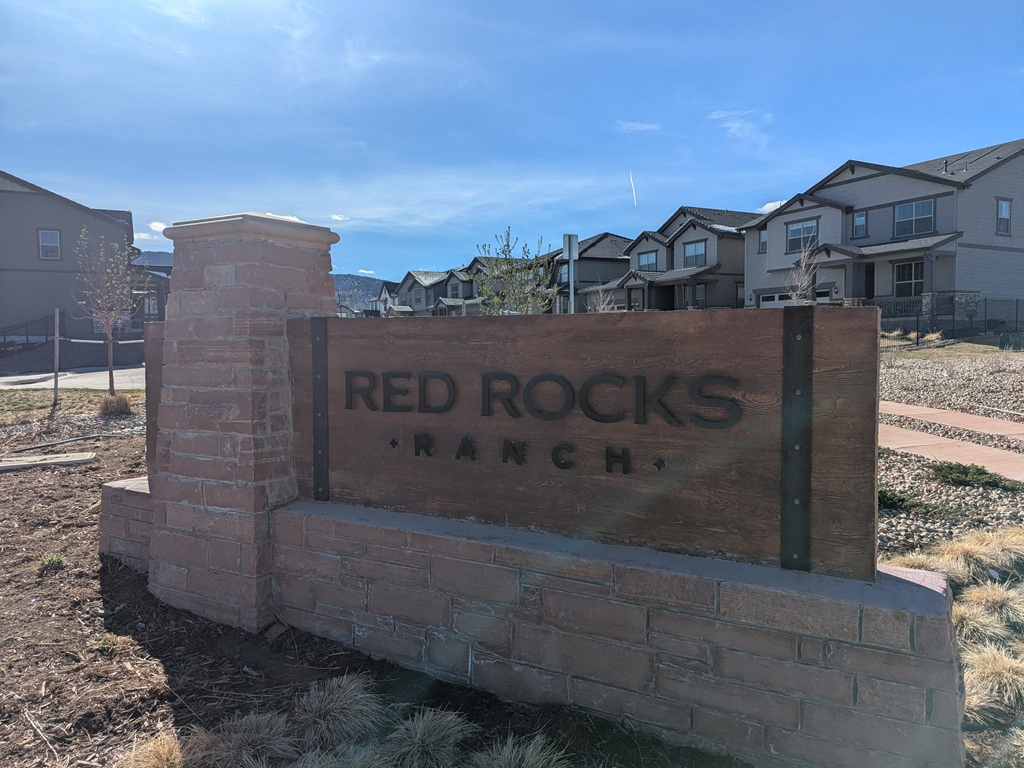 |
District's Relationship to RRC Authority
The RRC Authority (the “Authority”), a public corporation and political subdivision of the State of Colorado, was created via the RRC Authority Establishment Agreement dated April 6, 2023, by and between the RRC Metropolitan District Nos. 1, 2, 4, 5, and 6. At the time the RRC Authority was created, Lennar Colorado, LLC controlled the boards of all five districts. Each district may appoint one member to the 5-member board of the Authority.
The service boundaries of District 1 is comprised of 300 residential homes (fully built out) located southwest from District 2's service area. And District 2 is comprised of 703 homes (partially built out). However, the service boundaries of Districts 4, 5 and 6 are each comprised of a single vacant home lot owned by Lennar - which ensures Lennar will always control the majority of directors appointed to the Authority. So, although 99.9% of the property tax base subject to the Authority is located in Districts 1 and 2, Districts 1 and 2 will never control the majority of votes on the Authority's Board.
The Authority may, combined with the Districts, incur a maximum debt of $50,000,000. Ad valorem property taxes, specific ownership taxes, and any other legally available moneys from the members of the Authority may be used to repay the Authority's debt.
The Authority does not impose a debt service mill levy on any properties in Districts 1, 2, 4, 5 and 6. However, the Districts may assess, as adjusted for statutory or legislative changes on or after January 1, 2016, a maximum mill levy of fifty (50) mills to repay any such debt issued by the Authority. Per separate agreements between the Districts and the Authority (entered into when Lennar controlled the boards of all Districts), the Districts have agreed to pledge their revenues to the Authority.
As of December 2026, the District is in the process of terminating its membership in the Authority.
District Board Composition and History
Between December 2016 and May 2025, all directors serving on the District's board were employees, owners, agents, close family members or designees of the primary company developing all land within the District. Consequently, all such directors had conflicts of interest regarding their public service on the District's board. In May 2025, the first resident, taxpaying homeowners were elected to the Board.
May 2025 was the first time since the District was created in 2016 that a majority of the District's board was comprised of independent directors (who were homeowners). Subsequent to May 2027, all directors serving on the District's board will be independent regarding their public service on the Board.
District Revenue Sources
In order to fund the repayment of its bond debt, the District generates revenue from the following sources:
Property Taxes: Each year, the District assesses property taxes to fund the District's administrative costs and the repayment of the District's debt. Property tax assessments is the District's primary source of revenue and currently comprises approximately 96% of the District's total annual revenue.
Maximum Debt Levy: The District’s Service Plan establishes a Maximum Debt Levy the District is permitted to impose on all taxable property within the District for the purpose of funding the repayment of the District’s debt. The Maximum Debt Levy is 50 mills, as adjusted by the State of Colorado for changes in the ratio of taxable valuation to assessed valuation of real property since January 01, 2016. As of January 01, 2016, the ratio was 7.96%. The ratio for 2026 is 6.80%, which caused the District’s Maximum Debt Levy for the 2027 tax collection year to be 59.864 mills.
Maximum Operations Levy: Within the mill levy limits established by the District's service plan, the District also has voter approval (per the November XXX TABOR election) to levy up to $XXX in property tax revenue each year to fund the District's operations.
State Tax Subsidies: Each year, the District receives a "specific ownership tax" subsidy from the State of Colorado. The State funds this subsidy from its collection of annual vehicle registration fee taxes paid by owners of Colorado-registered vehicles. The subsidy is paid out in the form of a matching contribution to the District and is calculated as a percentage of the total property taxes assessed by the District. The State establishes the rate each year for matching contributions. For the past few years, this subsidy has comprised approximately 6.5% of the District's total annual revenue.
Interest Income: State laws restrict the types of funds in which the District may invest its cash. The District's investment income is an insignificant source of revenue to the District due to the low interest rates offered on investment funds available to metropolitan district.
District Contractors
Click here to lean more about the District's contractors.
Bond Debt
Click here to learn more about the District's bond debt.